
Lucid dreaming, dream engineering can help patients overcome trauma, deal with grief
Imagine you’re lying in bed sleeping. At the same time, you’re flying around the room. You’re aware that you’re dreaming. What’s happening? You are lucid dreaming.
“Lucid dreaming is a kind of dream where you become aware that you are dreaming while still asleep,” said dream scientist Dr. Michelle Carr, author of “Nightmare Obscura: A Dream Engineer’s Guide Through the Sleeping Mind.”
Other examples of lucid dreaming: You’re playing a classical sonata on the piano — a piece you’ve been trying to perfect, or you’re chatting in a second language you’ve just started learning, or you throw the perfect touchdown pass — all while asleep.
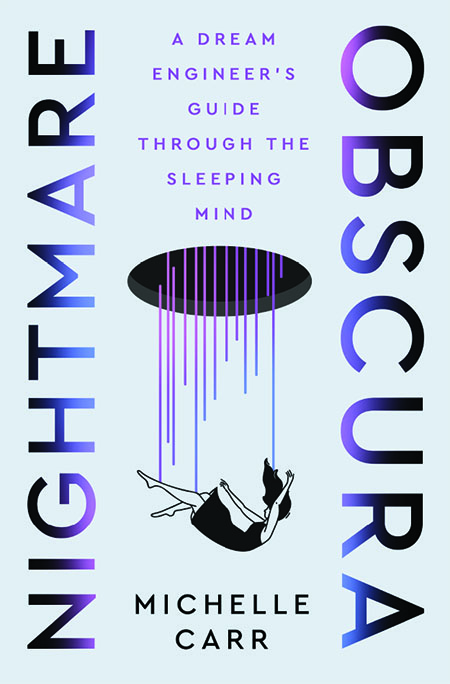
“Many people have lucid dreams spontaneously in their lives, and these tend to be enjoyable experiences. People often choose to fly, to practice skills or to seek out new experiences,” explained Carr, who recently conducted a presentation, “Unlock the Hidden Power of Dreams,” as part of a virtual author series offered by the Ocean City Free Public Library through a nationwide Library Speakers Consortium.
Drawing on her expertise in nightmares, lucid dreaming and the emerging field of dream engineering, Carr explained how people can alter their dreams to improve their sleeping and waking lives.
Carr noted that lucid dreaming can help people harness their sleeping minds to enhance skills. Not only that, it can help people overcome nightmares.
Carr, director of the Dream Engineering Laboratory in the Center for Advanced Research in Sleep Medicine (CARSM), located at the Hôpital du Sacré-Cœur-de-Montréal, and an assistant professor at the University of Montreal, has always been fascinated by dreams.
Her personal experience led her into the field of dream science. In high school, she began experiencing dream paralysis.
“It’s a kind of nightmare that occurs right as you are waking up from sleep and your body is still paralyzed. Your body is paralyzed during REM sleep, but your mind is starting to wake up. You enter this terrifying transition state where you are trying to wake up, but you can’t move,” Carr said.
She explained REM sleep is a simulation of wakefulness that helps people process and prepare for wakeful life. REM sleep usually occurs in the early morning.
“When I was in college, I naturally discovered how to overcome sleep paralysis through lucid dreaming,” Carr continued. “Rather than trying to wake up, if you instead relax and start to fall back to sleep, you can naturally enter a lucid dream.
“Once I started doing that, I began having pleasant, fascinating experiences where I was inside a dream and seeing it be created before my eyes. It was mind-opening, a positive transformation.”
Along with that personal experience, Carr has learned about sleep science by working in sleep labs and studying neuroscience.
“All of this led me to becoming a dream scientist, studying the mind during sleep, dreams, and, eventually, how we can treat nightmares and potentially use lucid dreams for mental health and well-being,” Carr said.
She explained how she and her associates study people in sleep labs: “We hook people up to electrodes and measure brain activity, muscle activity, breathing and heart rate. We wake people up a lot — gently — maybe 15 times in a night, and ask what they are experiencing. We’re trying to uncover how the activity of dreaming is linked to the functions of sleep.”
Carr pointed out that sleep helps strengthen memories and regulate mood. It can foster creative problem solving and bring insights.
Lucid dreaming
Carr noted that dream engineering involves attempts to direct dreams within a lab environment. Dream engineering methods can be used to induce lucid dreams.
“For instance, in our lab, we have applied sensory stimuli to dreamers while asleep, such as flashing lights and beeping sounds. These sensory cues can infiltrate the person’s dreams and remind them that they are dreaming, enabling them to become lucid,” Carr said.
In an email interview, Carr shared several techniques for increasing the chances of lucid dreaming.
“You can practice checking multiple times throughout the day whether you are awake or dreaming, training your mind to ask the question: ‘Am I dreaming right now?’ which you will then be able to do within a dream,” Carr commented.
“You can also wake up in the early morning a couple of hours before usually getting up, and stay awake for about 30 minutes while mentally telling yourself that ‘the next time I’m dreaming I will remember that I’m dreaming.’ These techniques prepare your mind to become more lucid, and can capitalize on the fact that in the early morning we have lighter sleep, when we are more likely to become lucid,” Carr said.
Dream engineering
“Lucid dreaming involves the dreamer using their own intention to decide to practice certain tasks within a dream, and this does indeed seem fruitful in experimental studies (and anecdotally from athletes, musicians and artists),” Carr said.
“Through dream engineering,” Carr continued, “we are able, to some extent, to direct the content of dreams. Dream engineering opens the possibility of directing dreams toward certain forms of learning even without the dreamer’s intention.
“For example, sensory stimuli could be paired with a learning task prior to sleep (or part of the task such as learning a piece of piano music). Later during sleep, the same sensory stimuli, such as a clip of music, is presented to the dreamer, and this can increase dream images related to the learning task and subsequently improve performance.”
Another example: People in the dream lab will play a virtual reality game with flashing lights and vibrations before going to sleep. “If we replicate the lights and the sounds while they are sleeping, they will dream about the task — playing the game,” Carr said. “When the brain hears the sound, it’s formed this association with the learning task. People start to dream about the task.”
Overcoming nightmares
“Our dreams are attempts to process the stress of life,” Carr noted. “Everyone has bad dreams. In fact, it’s thought that our dreams may be more negative overall than positive. Nightmares are normal. However, some people get nightmare disorder, which can cause a lot of distress.”
“People who dream more than others tend to have more nightmares,” Carr explained. “People who suffer from PTSD experience more nightmares. Statistics show that 90 percent of people with PTSD have nightmares — replicated nightmares where they replay the trauma they experienced. People who are going through major life changes, anyone exposed to trauma, and highly sensitive people tend to get more nightmares.”
“As much as the field of dream science is fascinating,” Carr added, “one motivation for writing my book was to help people who suffer from nightmares regain a sense of control. By working with dreams — paying attention to them — you can actually change them.”
Notably, Carr said she was able to change terrifying dreams she had about tidal waves by turning the waves into a giant snail and transforming into a dolphin.
“Lucid dreaming can help someone overcome nightmares by realizing the threat in the dream is not real, thus lessening their fear and enabling them to choose a different dream narrative,” Carr said.
“The idea that you can control your dreams seems like science fiction, but it’s not,” Carr noted. “You can turn a nightmare into something new. We ask people to imagine changing the nightmare.”
Carr explained that the technique of “re-scripting” nightmares is commonly used, a method in which individuals learn to change the negative elements of the nightmare to be more positive or to resolve.
“In general,” she added, “those who have nightmares can start by recording their dreams, noticing patterns and recurring features that occur in their dreams. They can practice recalling bad dreams, and potentially recalling nightmares (if they feel comfortable) while in a calm state of relaxation, learning to feel less distressed by the images of dreams.
“Or, individuals can simply practice imagining pleasant dream scenarios, rehearsing a vivid enjoyable dream in as much sensory detail as possible, especially before going to sleep at night.”
Imagery rehearsal therapy uses several techniques.
“A psychologist helps a patient first recall a nightmare while awake, and then change the nightmare in a way that feels satisfying,” Carr noted. “The patient then rehearses this new version of the nightmare for 10-20 minutes a day at home, often in bed prior to sleep.”
Potential risks
During the presentation, a viewer asked if there was a risk to dream engineering — “Could we accidentally mess with the brain’s natural processes?”
“Dream engineering,” Carr responded, “is really a research tool, something that helps us as scientists to better experimentally study dreams and attempt to direct dreams and control dreams within the laboratory environment to better understand how they are potentially functional.
“We do see in certain studies that by getting someone to dream about learning tasks they may have better learning the next day. There are studies in sleep that use that kind of sensory stimulation to trigger memory reactivation and memory consolidation during sleep.
“I don’t think we know if this is something we would advise someone to do every night at home. I don’t think we’re there yet. I think right now it’s something we’re studying primarily in the lab. I think we’d have to do a lot more experiments in the lab to see if this is something people should be doing.
“Maybe it’s something you could use on occasion — maybe once a week you use it to help with language learning. I don’t think we’re at a point to start using it excessively every night,” Carr said.
“Risks,” according to Carr, “have some relevance to lucid dreaming techniques, indeed the wake-back-to-bed technique requires individuals to disrupt their sleep schedule, so it’s certainly not something we would recommend doing every night.”
New applications
Carr pointed out there are new applications for dream science in health and wellness.
“Expanded attention to dreams in different health conditions is becoming more important, and clinicians are becoming more open to working with and paying attention to dreams,” Carr said. “For instance, in bereavement, patients can experience incredibly sad grief dreams that cause waking distress, or pleasant visitation dreams where they see the deceased in a way that brings a sense of peace and closure.
“In addiction recovery, patients often experience drug-using dreams, which can trigger relapse or provide a source of renewed commitment to abstinence,” Carr continued. “In autoimmune disorders, disturbing nightmares can precede flare-ups in symptoms and clue a patient in to oncoming physical needs.
“Aggressive nightmares accompanied by physical enactments (punching, kicking) can be an early sign of neurodegenerative disease, and nightmares of death can indicate suicidal ideation and risk.”
Paying attention to dreams, according to Carr, can provide a tool to improve health and overall well-being.
To that end, dream on.
By ALICE URBANSKI/For the Star and Wave