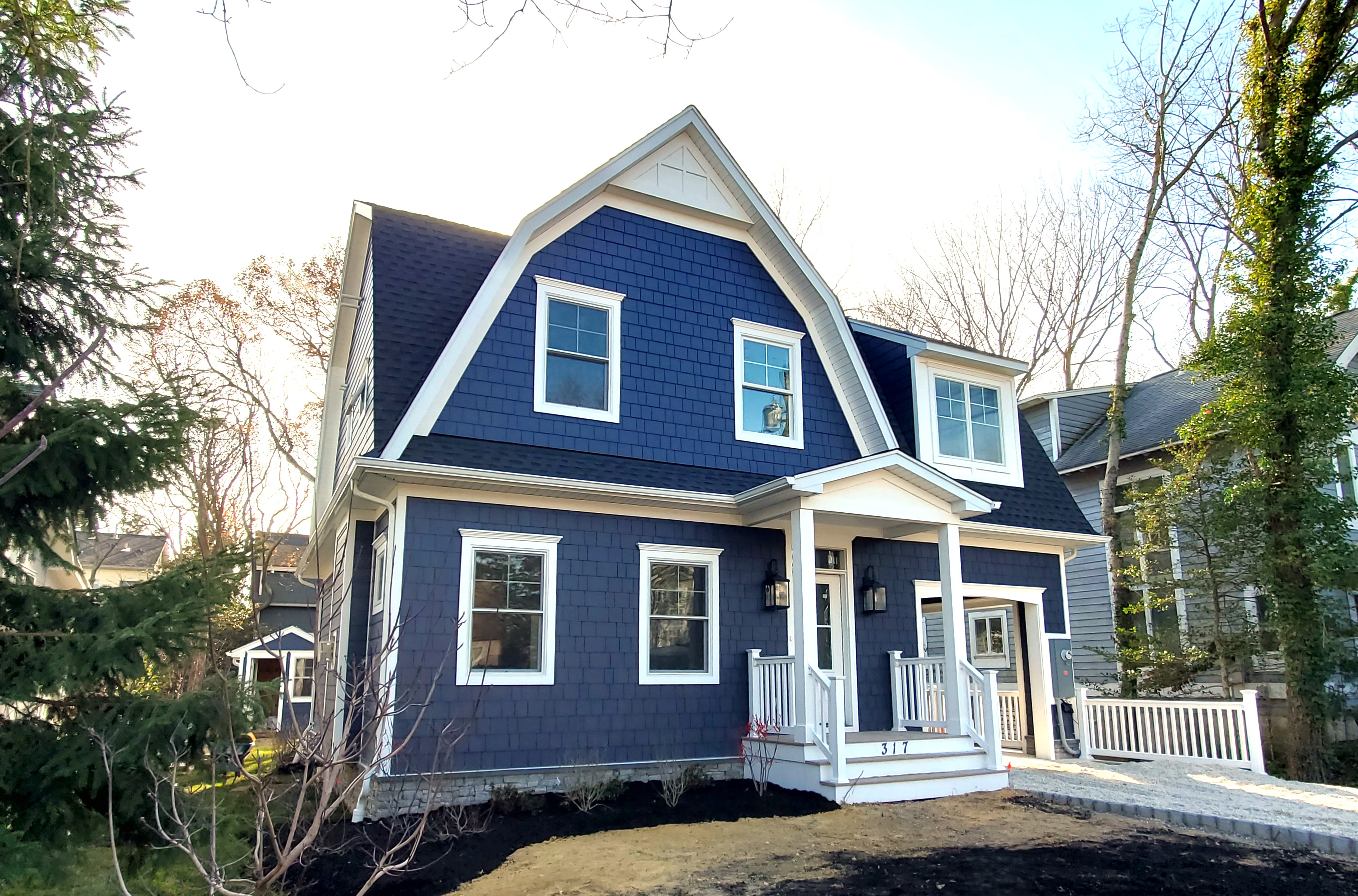
CAPE MAY POINT — One of the best sleight-of-hands in years, a new home that looks like it’s been in place for ages is just now being finished in Cape May Point.
The home at 317 Stites Ave. is blessed with a great location in one of the most enviable places to live on the East Coast. Happily, the exterior of the home does not war with the neighbors or the old-fashioned vibes people love about the Point.
This lovely blue Dutch Colonial home might be a modern masterpiece, but it still scratches the itch for those whose dream house has history.
Fashions cycle back again and again, and here we are at the end of 2025 talking about one of the most popular styles of a century ago: the Dutch Colonial.
More accurately described as a Colonial Revival style with a gambrel roof, so-called “Dutch Colonial” homes reflected the early 20th century longing for permanence.
They provided a reassuring sense to a generation that had just escaped a world war. To paraphrase Ina Garten, “if you didn’t inherit a family estate in the countryside, store bought is fine.”
The distinctive roofline began popping up everywhere, from Brooklyn to the beaches, and every previously undeveloped hillside outside of Philadelphia was sure to have one out of every five houses sporting the distinctive fan windows on either side of the central hearth.
The style’s popularity exploded in large part due to magazines such as Better Homes and Gardens and early films made in New York and New Jersey, and of course Connecticut, where apparently every New York writer wanted to live.
By comparison, the shore town of Cape May was heading through one of its sleepier moments (which no doubt helped preserve the architectural styles of previous eras).
The adjacent community of Cape May Point, which had always marched to the beat of its own quirky drum, was a little different: the original summer cottages were designed for an easy, no-frills summer life, at least by the standards of wealthy Victorians, and were therefore treated like something between a tent and a doll’s house by the migratory owners.
There have been successive waves of housing styles since the founding of Cape May Point, but the distinctive gambrel roof so often equated with rolling hillsides and what was even then called “old money” was still a rarity on the island.
One of the recognizable attributes of this style is how modest it appears from the outside while the interior space is nothing short of magical.
Somehow this very tidy, simple two-story home at 317 Stites Ave. has five large bedrooms, including a primary suite on the first floor.
This room is toward the back of the house, behind a carport that adds slightly more charm and flexibility than a closed garage would have done.
This entrance leads to a mudroom, so those who choose to spend the mornings scampering along the trails only a short distance away at multiple sanctuaries and parks can clean up quite easily, dropping camera or art supplies in the mudroom along with their boots.
The laundry and utilities are conveniently located there, as well as a small powder room. The home also has three full baths.
Anyone who has ever had to herd small children home from the beach, which is barely a block from the door, will appreciate that carport entrance and the outdoor shower for cleanup just around the back.
Those entering from the front door, by contrast, step into an elegant, open great room with coffered ceilings and a glowing gas fireplace.
Since construction is only just winding up, there are no pictures showing the finished result, but the fixtures already installed should provide some indication of the elegant plans: the exterior is clad in Hardie siding, the kitchen has high-end stainless steel appliances, including a beverage cooler in the island, a refrigerator with French doors and the like, to offer a home that is top of the line in every respect.
As the nation’s home-builders try to decide how they really feel about dining rooms, this home has been built around the un-ignorable fact that family gatherings and even additional workspace require a large, comfy dining table. Sure, the kitchen island can offer seating, but there is something to be said for sitting down to look at each other, not the gleaming backsplash or unwashed pots piling up after a meal.
To that end, the dining area is at least the size of the kitchen, taking up half the space of the great room in the back; but that area is backlit by the sunroom just beyond.
This cozy space offers just a little bit of quiet and privacy away from the common-use great room, elegant as it may be. This is not an enclosed porch or patio, but a comfortable four-season room with windows looking out over the paver patio and landscaped backyard.
From here the longest stretch of green on the 5,000-square-foot lot opens up, ending in a small storage shed with matching siding and trim. The entire yard is irrigated by an in-ground sprinkler system, so maintaining the space for children or pets to play is simple.
Those entering from the front door also pass the staircase at the front foyer, which leads up to four bedrooms gathered around a central hall.
The two gables of this home offer spaces along the points of the compass, with the largest one devoted to another bedroom suite with its own full bath. The other rooms share the third and final full bath, located along the hall between the rooms.
Even the smallest of the bedrooms has space for a pair of twin beds, although there is no law saying it couldn’t be used as an office or playroom. In keeping with the traditional Dutch Colonial magic, the home that looked quite modest from the street holds a shocking amount of space.
This tidy blue nest could easily hold three generations under its roof, with the older members of the family on the main floor and the little ones and their parents sleeping above.
There are so many things to love about this design and the way it has been implemented in this modern build; but it still has to compete with the location for best attribute.
They really pulled off a neat trick making this dream house look like it’s always been waiting, but without the kind of worry and endless repair old houses tend to require. In fact, that might be the dreamiest part.